Thought Leadership Content: What It Is + How to Create It
Thought leadership content is often misunderstood. Over the past decade, I’ve read hundreds of articles branded as “thought leadership,” but most fall short. They recycle generic advice, lack originality, and ultimately fail to challenge or inspire.
True thought leadership offers unique insights grounded in real-world experience. It changes how people think and motivates them to take action.
In this guide, I’ll walk you through what thought leadership content really is—and exactly how to create it effectively.
✅ What Is Thought Leadership?
Thought leadership is when individuals or organizations share perspectives rooted in their own knowledge and experience that influence how others think or act.
It’s not about sounding smart—it’s about offering substance that sparks conversation, challenges assumptions, and provides genuine value.
🤔 Thought Leadership vs. Content Marketing
Thought Leadership
Content Marketing
Shares unique, experience-based insights
Encompasses all types of valuable content
Focuses on original ideas and viewpoints
A broader strategy to attract and engage audiences
Often used to build authority and trust
Can be used for awareness, lead generation, retention
In short: Thought leadership is a powerful subset of content marketing.
🧠 Who Is a Thought Leader?
A thought leader is someone who consistently shares insightful content based on firsthand knowledge—often founders, marketers, engineers, operators, and subject-matter experts.
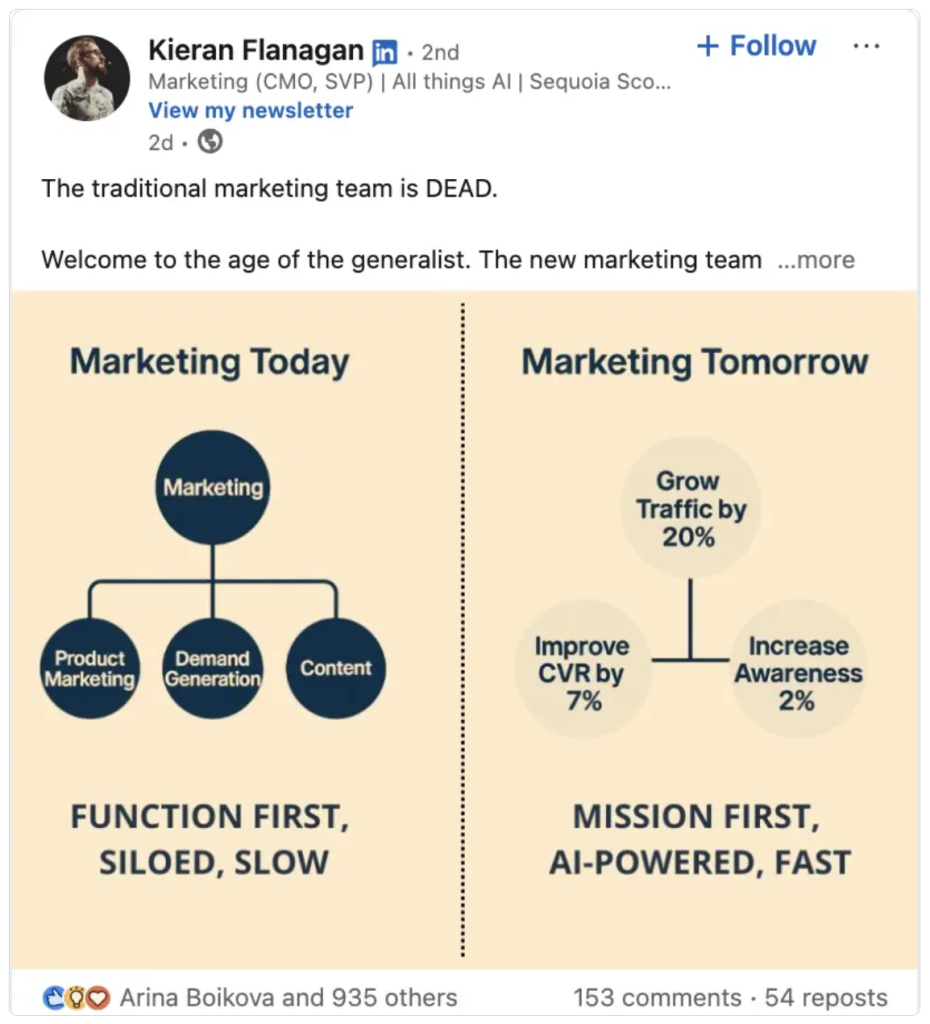
Example: Kieran Flanagan, former CMO at Zapier and SVP at HubSpot, often challenges conventional marketing norms and brings emerging trends to light.
To become a thought leader:
Pick a niche you can own
Speak from experience
Publish only when you have real value to add
Build authentic relationships with your audience
💡 Why Thought Leadership Matters
Creating thought leadership content can:
Boost your credibility and trust
Generate leads and media opportunities
Attract investors, partners, or top talent
Start conversations in your niche
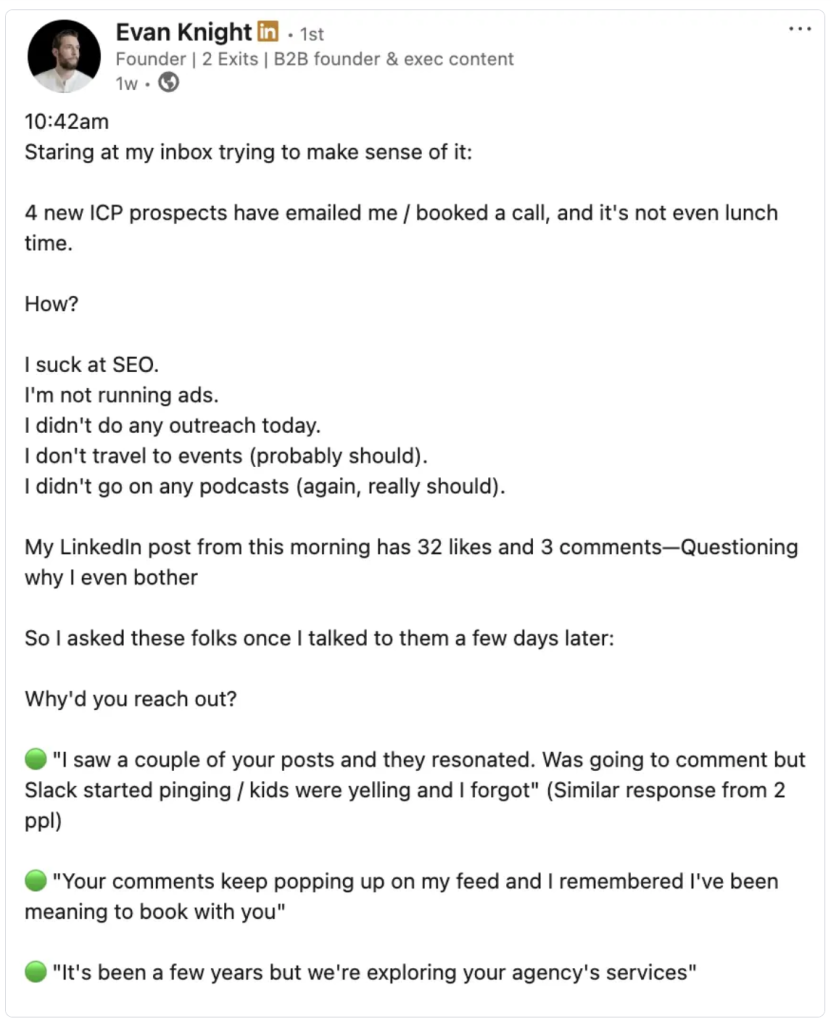
Case in Point: Evan Knight, Founder of Thoughtful Content, landed four client calls in one week from LinkedIn thought leadership posts alone.
🛠️ How to Create Thought Leadership Content: An 8-Step Framework
Here’s the process I use to help founders and marketers consistently create standout thought leadership.
1. Define Your Goals & Audience
Before writing, ask:
What’s my business goal? (e.g., build trust, attract clients, position myself as an expert)
Who am I trying to influence?
What do they currently believe about this topic?
What misconceptions can I address?
Research your audience through:
Social listening
Sales call transcripts
Reddit, Quora, niche forums
2. Brainstorm Strong, Original Ideas
Look for ideas rooted in experience. Ask:
What have we tried that others haven’t?
What did we learn from failures?
What’s everyone saying that might not be true?
Example: Jakub Rudnik shared how publishing more content didn’t help—until his team focused on foundational SEO fixes first. This kind of honesty builds authority.
3. Identify the Right Voice
Thought leadership doesn’t always need to come from the CEO.
Tap into:
Product managers sharing research methods
Developers highlighting what worked in a sprint
Customer success leads describing real challenges
Whoever has firsthand experience is your best voice.
4. Choose the Right Format & Channel
Match the idea to the best platform:
If It’s…
Use This Format
Timely or reactive
LinkedIn post or X (Twitter) thread
Insightful but brief
Carousel or infographic
Deep or complex
Blog, podcast, video, or gated report
Tip: For fast-growing reach, LinkedIn is currently one of the most effective platforms for organic thought leadership.
5. Build a Simple Content Plan
Plan your ideas with a basic backlog or calendar.
Track:
Topic/theme
Format
Assigned writer
Publish date
Distribution channel
This keeps your strategy consistent and measurable.
6. Create a Strong Content Structure
Use this checklist before writing:
✅ Hook: Grab attention in the first sentence
✅ Key takeaway: What’s the “so what?”
✅ Tone: Choose casual, personal, or authoritative—depending on your audience
✅ Format: Narrative, how-to, or insight-led?
✅ Visuals: Use graphs, quotes, or custom graphics
✅ CTA: What should readers do next?
Example: Nathan Adams nails it with a punchy hook, a solid structure, a clear takeaway, and a friendly CTA.
7. Use Tools to Scale Content Production
If you’re creating content regularly, AI tools can save hours.
Pro Tip: I trained a GPT model on my own writing style. Now, I just drop in an idea and get a high-quality draft tailored to my voice.
8. Publish and Promote
Once your content is live:
Repurpose it into short posts, visuals, or slides
Share it via email newsletters
Resurface it monthly or quarterly
Encourage internal team members to reshare or comment
🚀 Final Thoughts
Thought leadership isn’t just about posting often—it’s about saying something worth reading. When you lead with experience, back it with real insight, and distribute it strategically, you earn attention and trust.
Ready to create impactful content that positions you as a thought leader?
Start by identifying one idea from your own experience—then build from there.